

Topical finasteride (Fynzur spray): how does it compare to the tablet, and who might it be a better choice for?
Topical finasteride is finasteride sprayed on the scalp; one registered form, Fynzur spray, is an authorised, prescription-only medicine in several EU countries. In the registration study, over 24 weeks it produced more hair on the crown than placebo, and a number numerically similar to the tablet; the summary of product characteristics (the officially approved text) calls this a moderate effect. It also lowers the blood DHT level, just less: by an average of 34.5%, versus 55.6% for the tablet, so according to the summary, sexual side effects may occur with a lower probability, though they can't be ruled out. It may be worth considering for someone looking for a smaller hormonal effect than the tablet, who accepts the daily spraying, the at-least-six-hour no-wash window, and the strict contact rules; it's contraindicated in women.
What is topical finasteride, and how does it differ from the tablet?
Topical finasteride is finasteride sprayed or applied on the scalp: the same active substance that's in the tablet, just entering through the skin instead. Finasteride lowers the formation of DHT (dihydrotestosterone); DHT is the hormone that drives male pattern hair loss. I described how this happens in the follicle, and what the tablet can do, in the article about oral DHT blockers.
A 0.25% finasteride spray is authorised for hair loss in several European Union countries, marketed under a different name in each country; in Hungary and Czechia its name is Fynzur.1 According to the summary of product characteristics, its indication is mild to moderate male pattern hair loss in men aged 18 to 41.2 One spray is 50 microlitres of solution, containing 114 micrograms of finasteride. The solution is alcohol-based (contains ethanol), which according to the summary may cause a burning sensation on damaged skin.2
It differs from the tablet in how much reaches the blood. According to the summary of product characteristics, absorption through normal, intact scalp is minimal: the highest finasteride blood level measured over the six months was, at every measurement, more than a hundred times lower than with the daily 1 mg tablet (roughly under 50 picograms per millilitre, versus around 7,000), and its relative bioavailability compared to the tablet is roughly 2–3%. This expresses how much active substance reaches the bloodstream compared to the tablet.2
What you can take from this: much less active substance from the spray reaches the blood than from the tablet, but topical use doesn't mean nothing gets in at all.
Does the spray lower DHT throughout the whole body?
Yes, just less than the tablet. In the registration study that Fynzur's authorisation is based on, blood DHT levels at week 24 were on average 34.5% lower than baseline for spray users, and 55.6% lower for those taking the daily 1 mg tablet.2 There was no change for those on placebo.3 Of those whose DHT level was in the normal range at the start of the study, by week 24 it fell below normal (below 14 nanograms per decilitre) in 15.3% of spray users and 55.2% of those taking the tablet. The summary adds that DHT levels vary greatly between individuals.2
The summary of product characteristics calls both decreases clinically significant, and states that this points to the possibility of sexual side effects linked to the DHT decrease, with a lower probability for the spray than for the tablet. In the summary's side-effect table, the decrease in DHT level is listed as a very common item for the spray.2
The average decrease in blood DHT level at week 24, in the same study. A longer bar means a stronger decrease in the blood, meaning throughout the whole body.
What you can take from this: the spray also affects the whole body's DHT level, lowering it by roughly a third, the tablet by more than half; the difference is real, but the spray doesn't leave the hormone level untouched either.
If I spray more, does it work better?
According to the patient information leaflet, no: Fynzur doesn't work faster or better if used more often per day, but side effects may become more common, and you shouldn't use more than 4 sprays a day.1 The summary of product characteristics states, on overdose, that blood DHT levels are then expected to fall further, which may increase the likelihood of systemic effects, meaning effects on the whole body.2
Caserini and colleagues, in a 2016 one-week study of 32 men, gave men with hair loss who were otherwise healthy 100, 200, 300 or 400 microlitres of spray once daily, or a solution without the active substance (one spray is 50 microlitres). Scalp DHT levels fell by 47–52% at 100 and 200 microlitres, meaning two or four sprays' worth, and didn't fall further at 300–400 microlitres, meaning six to eight sprays' worth (37–54%). Blood DHT decrease, however, rose along with the amount: it fell by 24–26% at 100–200 microlitres, and by 44–48% at 300–400 microlitres. In the first, 18-person part of the same paper, 1 millilitre once daily, meaning twenty sprays' worth, lowered scalp DHT by 70%, and 1 millilitre twice daily lowered it by roughly 50%; in this part, blood DHT fell by 60–70%.4 In the 24-week registration study, the up-to-200-microlitre dose brought blood DHT down by 34.5%, more than this one-week measurement.2
In an earlier, 2014 one-week study of 24 people (also by Caserini and colleagues), the spray used twice daily lowered blood DHT by roughly 68–75%, and the daily 1 mg tablet by 62–72%.5 This was a twice-daily dosing schedule different from the approved one, and the abstract doesn't give the sprayed amount, but it shows that the spray, dosed this way, can lower blood DHT to a similar degree as the tablet.
What you can take from this: in the one-week measurement, six to eight sprays' worth didn't give more than two to four sprays' worth on scalp DHT, but it did in the blood; what more spraying means for hair wasn't measured.
This is a prescription-only medicine. I don't prescribe anything, and I don't replace a doctor. Weighing the benefit against the risk, the dosing, and monitoring are for your prescribing doctor, especially if you have a chronic condition, take other medicine, or are planning a child. The goal is for you and your doctor to be able to decide with every fact in hand.
What did the registration study show?
Fynzur's authorisation rests on a phase III, randomised, double-blind study, published by Piraccini and colleagues in 2022. Randomised means who went into which group was decided by draw; double-blind means neither the participant nor the assessor knew who was getting what. Between August 2016 and March 2018, 458 men were enrolled at 45 sites in five countries, aged 18 to 40, with mild to moderate male pattern hair loss visible on the crown. On the Norwood scale, which sorts balding patterns into grades, this is grade III vertex, IV and V.3
There were three groups, and everyone received both a spray and a capsule, so no one would know which was the real one. The first group got a real spray and a placebo capsule, the second got placebo of both (this is the placebo group), the third got a placebo spray and a real, daily 1 mg finasteride tablet; the tablet group was half the size of the other two. The spray was sprayed on dry scalp in the morning, one to four sprays depending on the size of the bald area, and left on for at least 6–8 hours, then washed off with shampoo. Treatment lasted 24 weeks. Hair was counted in a tattoo-marked, 1-square-centimetre circle on the crown, from macro photographs.3
By week 24, hair count rose by an average of 20.2 hairs for spray users, 6.7 for those on placebo, and 21.1 for those on the tablet. The difference between the spray and placebo was statistically significant, meaning it's unlikely to be down to chance.3 The summary of product characteristics gives more cautious, post-hoc figures, which imputed missing data from participants who dropped out as if the placebo group's result applied to them. By this measure, the spray gave 16.3, placebo 6.3, and the tablet 18.7 hairs; the difference between the spray and placebo was 10.0 hairs, with a 95% confidence interval of 2.2 to 17.7 hairs. At week 12, the spray's advantage over placebo was already significant.2
The more cautious analysis published in the summary of product characteristics. The tablet group gave 18.7 hairs; the summary treats this as a descriptive comparison, and the study didn't test whether the spray and the tablet are equivalent.
The summary of product characteristics sums it up like this: the spray showed moderate clinical efficacy, better than placebo, and numerically similar to the tablet group, which was, however, only used as an exploratory, descriptive comparison.2 Numerical similarity doesn't mean the two are equivalent. The tablet group was sized to show a difference in blood DHT level, equivalence in hair count wasn't tested, and hair count was evaluable in 48 people in that group.3
What was measured besides hair count gives a more restrained picture. Hair thickness didn't change meaningfully in any group, and participants gave a similar score in the three groups for their own overall assessment of their hair. In a post-hoc analysis, though, more spray users reported any improvement at all in the “appearance of hair” question (40.9%, versus 28.7% for placebo and 36.9% for the tablet).2 The investigator, who looked directly at the scalp, saw an average improvement of 0.8 points on a seven-point scale for the spray, 0.3 for placebo and 0.7 for the tablet; the difference between the spray and placebo was significant. An expert blindly assessing the photos, however, saw on average no change, or only a minimal one, in any group.3 Looking at who saw any degree of improvement at all, this was 26.0% of spray users, 16.0% of those on placebo, and 28.6% of those on the tablet; this is a post-hoc analysis, and “any improvement” is a very low bar.23
The study's biggest weakness is dropout. Of the 458 men enrolled, 323 finished; 32.3% of the spray group and 29.4% of the tablet group discontinued early, and evaluable hair-count measurements remained for 250 people (54.6%).2 The dropout rate and its reasons, according to the authors, were similar between groups, and they themselves write that understanding the reason for so much discontinuation may help design future studies. The study was funded by Polichem and Almirall, and some of the authors were Almirall employees;3 the marketing authorisation holder for Fynzur is Polichem, its manufacturer Almirall Hermal.1
What you can take from this: over 24 weeks the spray produced more hair than placebo on a small area of the crown, numerically similar to the tablet; hair thickness didn't change, participants' overall self-assessment didn't differ from those on placebo, and nearly half of the enrolled men dropped out of the hair-count assessment.
Microneedling is a mechanical stimulus with no hormonal effect, so it can be added alongside drugs that act on DHT.
 See the Dermastamp
What do we know from other studies, and beyond 24 weeks?
There's a second phase III study too, from China. In a study published by Zhou and colleagues in 2026, 270 Chinese men took part at 16 Chinese sites, between December 2021 and March 2023: 180 got the 0.25% spray once daily, 90 got placebo, for 24 weeks; there was no tablet group. By week 24, hair count rose by an average of 11.96 hairs with the spray and 6.68 with placebo, on a 0.903-square-centimetre area. The difference was 5.28 hairs (95% confidence interval: 0.98 to 9.59), which was significant; at week 12 the difference was only numerical. On the questionnaire measuring sexual function, there was no significant difference between the spray and placebo. The study was sponsored by the pharmaceutical company Cutia Therapeutics, which also supplied both the spray and the placebo; the spray studied was, like Fynzur, a 0.25% hydroxypropyl chitosan solution, and according to an Almirall press release from 12 March 2026, Cutia markets Almirall's topical finasteride product in China under a licensing agreement.6 The effect size differs between the two studies: in the Chinese one the surplus over placebo was smaller, measured on a different-sized area and in a different population, so the two numbers can't be placed side by side one-to-one.
In an earlier, smaller study, Hajheydari and colleagues in 2009 compared a 1% finasteride gel (with a placebo tablet) to the daily 1 mg tablet (with a placebo gel) in 45 men, over 6 months. They found no significant difference between the two groups in hair count, hair thickness or the size of the bald area, and the authors say the effect of the two treatments was relatively similar.7 This is a different form and a different concentration than Fynzur, with no placebo group, and equivalence can't be established from a sample this size.
Gupta and colleagues' 2025 network meta-analysis (comparing many studies within one shared statistical model) processed 33 studies, and the authors say that the effect of 0.25% topical finasteride and the 1 mg tablet is comparable. The topical finasteride arm, though, rests on three studies, and one of these (Bharadwaj and colleagues, 2023) used, instead of a spray, a solution compounded in-house by the institute's own pharmacology department, at 1 millilitre twice daily, meaning many times Fynzur's largest daily dose; the model pools once-daily and twice-daily dosing together, and the authors themselves write that there's little data on the efficacy of topical finasteride, especially in North America.8
I didn't find a placebo-controlled study longer than 24 weeks with the 0.25% spray. The 2025 summary of product characteristics states there's no clinical experience with topical finasteride treatment longer than six months.2 One much earlier, small study went on for longer: Mazzarella and colleagues in 1997 compared a much more dilute, 0.005% solution to placebo in 28 men and 24 women, twice daily, over 16 months, and described slower hair loss compared to placebo by month 6. I didn't have access to this paper's full text, so I only know it from a 2018 review's description.9 In 2026, two research groups published one-year, retrospective data, with no control group. Piraccini and colleagues measured, in 146 men, an average increase of 22.7 hairs per square centimetre on the crown and 32.3 in the frontotemporal area; 6.2% had mild, transient local irritation, and the study excluded anyone with a prior history of sexual, mood, or breast-enlargement complaints; the paper notes that one author, Michela Starace, received consulting fees from Almirall.10 Gallo and colleagues measured, in 123 men, an increase of 21.8 hairs on the crown and 29.4 at the temples, with 7.3% mild, transient irritation.11 Neither dataset reported sexual or mood side effects, but the first excluded anyone with such a prior history to begin with. Without a control group, these numbers can't be separated from natural fluctuation and measurement error, so they point towards durability without proving it. The two placebo-controlled studies measured on the crown; I didn't find placebo-controlled data for the hairline or the temples.
What you can take from this: for the 0.25% spray, placebo-controlled data exists for 24 weeks, from two studies, with differing effect sizes; I didn't find placebo-controlled data for one year or for the hairline.
What side effects can it have?
In the registration study, a sexual side effect linked to treatment (sexual dysfunction, erectile dysfunction, decreased libido) was reported by 2.8% of spray users, 3.3% of those on placebo, and 4.8% of those on the tablet, over 24 weeks. Because of these, treatment was discontinued by 0% of the spray group, 1.1% of the placebo group, and 2.4% of the tablet group. On the questionnaire measuring sexual function, there was no significant difference between the spray and placebo.3 In the 181-person spray group, 2.8% represents roughly five people, and the study wasn't sized for this. From this you can conclude that the spray, in this study, didn't give more sexual complaints than placebo, but not that this side effect isn't possible; the summary of product characteristics itself only says it may occur with a lower probability than with the tablet.2 Later reviews, such as Złotowska and colleagues' 2026 work, cite this same 2.8% and 4.8%, from this same one study.12
The two placebo-controlled studies showed something different for skin reactions. The summary of product characteristics lists itching and redness among the spray's common side effects, and for this same study reports itching in 5 of the 181 spray users (2.8%) and redness in 4 (2.2%).2 In the European study, treatment-related itching was 2.2% for the spray, 0.6% for placebo and 1.2% for the tablet, and redness was 2.2%, 0% and 0%; the authors describe this as a tendency towards skin and application-site local reactions, typically mild or moderate. On a separate scale scoring skin irritation, fewer than 1% of participants in every group showed irritation. Any treatment-related side effect was reported by 9.9% for the spray, 6.6% for placebo, and 11.9% for the tablet.3 In the Chinese study, the spray showed no more skin reactions: treatment-related redness was 1.7% for the spray and 2.2% for placebo, and itching was 1.1% versus 3.3%.6
The summary of product characteristics also states that further systemic side effects reported with the tablet may also occur with the spray: hypersensitivity reactions (skin rash, itching, hives, angioedema, meaning swelling around the mouth), depression, anxiety, palpitations, elevated liver enzyme levels, breast tenderness and enlargement, testicular pain, blood in semen, and infertility. No frequency is given for these with the spray; the spray's safety data is based on a total of 229 patients with hair loss and 97 healthy men.2 The patient information leaflet, in the same list, also names decreased sexual desire, difficulty getting an erection, and ejaculatory disorder, including a decreased volume of ejaculate.1
Breast cancer wasn't reported in the spray's studies. With the tablet, however, male breast cancer is a known risk, so according to the summary, any change in breast tissue (lump, pain, enlargement, or discharge from the nipple) must be reported immediately.2 A 2025 case report described painful, bilateral breast enlargement alongside topical finasteride (Thomas and Sinclair); I didn't have access to its full text, so I also don't know which product and what dose it concerns.13
PSA level (the blood test result used for prostate cancer screening) decreases with the tablet: in men aged 18 to 41, the average PSA value fell from 0.7 to 0.5 ng/ml over 12 months; there's no data on the spray's effect on PSA, but according to the summary this must be taken into account when interpreting the result, and the patient information leaflet asks you to tell your prescribing doctor about Fynzur before a PSA test.21
Ask your doctor this: if you've had a sexual, mood, or breast complaint before, or you go for PSA screening, what does this mean for you in the choice between the spray and the tablet?
Can the spray cause a mood change or suicidal thoughts?
According to the summary of product characteristics, no mood change or depression was reported in the spray's studies. With the daily 1 mg tablet, however, mood change, depressed mood, depression, and, more rarely, suicidal thoughts have been reported, so the summary states, for the spray too, that a doctor should be seen for any psychiatric symptom.2 The patient information leaflet says that if you experience low mood, depression, or suicidal thoughts, see your prescribing doctor as soon as possible.1
In 2025, the European Medicines Agency's (EMA) pharmacovigilance committee, the PRAC, conducted an EU-wide review of finasteride and dutasteride; the process concluded with the European Commission's decision on 22 August 2025. The review found no link between finasteride sprays applied to the skin and suicidal thoughts, so no new information was added to the sprays' accompanying documentation.14 The Hungarian direct healthcare professional communication of 3 September 2025 puts it the same way: there's currently not enough evidence to confirm a causal link between topically applied finasteride and suicidal thoughts. For the 1 mg tablet, the same letter states that the EMA confirmed: suicidal thoughts are a side effect linked to the medicine, with an unknown frequency.15
Very different amounts of data sit behind these two findings. The spray's safety data rests on 229 patients and 97 healthy men.2 For finasteride overall, counting every form and indication together, the review identified 313 cases related to suicidal thoughts in the European side-effect database, against an estimated roughly 270 million patient-years of use; most of the cases were reported in patients treated for hair loss.15 My own reading is that a rare side effect is harder to see in a database this much smaller, so “no link found” means something different from “proven to carry no risk.” The summary's warning applies to the spray too.2
What you can take from this: if you experience low mood, depression, or suicidal thoughts alongside the spray, the patient information leaflet says to see a doctor as soon as possible;1 for the oral tablet, the 2025 direct healthcare professional communication also asks that treatment be stopped in that case.15
Can the spray transfer to your partner or your child?
Yes, according to the summary it can transfer. The patient information leaflet states that Fynzur can be transferred by contact with clothing, hands, or other surfaces and objects, and can transfer to others if they touch the treated scalp or the surfaces Fynzur has come into contact with.1 The summary of product characteristics therefore states: a pregnant woman, or a woman who could become pregnant, must not come into contact with Fynzur, the treated scalp, or any surface Fynzur has come into contact with; nor should a child or adolescent under 18. After accidental contact, the affected body part must be washed thoroughly. According to the summary, the treated scalp must not come into contact with a pillow, helmet, or hat until dry.2 The patient information leaflet also asks that you inform family members and anyone with access to where it's stored about these precautions.1
For a pregnant woman, the reason is the male fetus; for children and adolescents under 18, the summary prohibits contact because of the possibility of finasteride absorption and its potential side effects.2 In pregnant monkeys, given a large oral dose (2 mg per kilogram of body weight daily, which according to the summary is more than two hundred times the spray's largest recommended daily dose), abnormalities of the external genitalia were observed in male fetuses.2 According to the summary's estimate, the average blood level in men using the largest recommended dose is a 39th of the estimated level that gave the largest dose without harmful effects in pregnant monkeys, and that of a pregnant woman in contact with it would be even lower.2 The summary prohibits the contact regardless. I didn't find a measured study of how much finasteride transfers to a partner or a child through skin contact.
According to the summary, it's unlikely that the active substance is secreted into semen with the spray: with the tablet, less than 0.001% of the 1 mg dose was detected in semen per ejaculation, and with the spray the blood level is more than a hundred times lower. This is an inference, it wasn't measured for the spray. The spray's effect on fertility hasn't been studied.2 If you're planning a child, I wrote separately about sperm and a pregnant partner: finasteride and having children.
Ask your doctor this: if you live with a pregnant or potentially pregnant partner, or a small child, which form carries the smaller risk for your family in your situation?
Can women use topical finasteride?
They can't use Fynzur. According to the summary of product characteristics, it must not be used to treat women, and it's specifically contraindicated in pregnant women or women who could become pregnant, because of the risk to a male fetus.2 The EMA, too, gives its indication for men aged 18 to 41.14 I didn't find a topical finasteride authorised for women in the EU.
For women, only small, off-label studies exist, mostly in the postmenopausal life stage. Suchonwanit and colleagues in 2019 compared a mixture of 0.25% finasteride and 3% minoxidil to 3% minoxidil alone in 30 postmenopausal women, over 24 weeks. The mixture was better for hair diameter, but blood DHT level also decreased significantly in the women, and the authors write that because it can be absorbed through the skin, it should only be considered for postmenopausal women.16 The effect here can't be separated out for finasteride alone, because they received a mixture. In a 2024 retrospective analysis, Starace and colleagues compared the spray, the daily 2.5 mg finasteride tablet, and topical minoxidil in postmenopausal women, over 12 months: in the ranking, the tablet came first and the spray last, but the differences weren't statistically significant.17 A small study was also done in women of childbearing age: Al Sayed and colleagues in 2025 split 45 women aged 23 to 43 into three groups, and 15 received a 1% finasteride solution, for 16 weeks. This conflicts with Fynzur's contraindication, and the authors themselves write that the safety of topical finasteride in premenopausal women is still uncertain.18
What you can take from this: as a woman, Fynzur isn't an option according to the summary; I wrote about the causes and options for female hair loss on a separate page.
How does the summary of product characteristics prescribe its use?
According to the summary of product characteristics, Fynzur should be sprayed once daily onto the bald areas of the scalp, with 1–4 non-overlapping sprays depending on the size of the area (50–200 microlitres of solution), and the daily limit of 4 sprays must not be exceeded.2 The patient information leaflet states that treatment should continue with the dose recommended by your prescribing doctor.1 The summary doesn't specify a time of day; in the registration study it was sprayed in the morning.3
Before spraying, hair and scalp must be completely dry. The spray nozzle must touch the scalp, so the finasteride doesn't disperse into the air, it must not be sprayed towards the face, and the solution mustn't reach the hand or any other body part beyond the scalp being treated.2 The patient information leaflet states it mustn't be washed off for at least 6 hours after spraying.1 I didn't find text in either the summary or the leaflet about what swimming, heavy sweating, or rain within those 6 hours means.
According to the summary, the effect generally needs 3–6 months of daily use to appear, and continued use is recommended to maintain the effect.2 The patient information leaflet states that hairs grown during treatment may fall out after stopping.1 The German summary of product characteristics also gives a timeline for this (the beneficial effect regresses after 6 months, and the baseline state returns within 9–12 months), but it states right before this that there's no clinical experience with Fynzur beyond 6 months, so this timeline isn't the spray's own measured data.19 One container holds up to 180 sprays' worth, and can be used for 6 months after first opening.2
What you can take from this: the number of sprays is set by the size of the bald area, four sprays is the upper limit, and according to the summary the effect can first be judged after 3–6 months.
Can it be used together with minoxidil or other hair products?
According to the summary of product characteristics, there's no data on using Fynzur together with topical minoxidil, or together with the 1 mg finasteride tablet. It also states that using another topical product (cosmetic, sunscreen, another skin medicine) on the same area at the same time hasn't been studied, and their use should be avoided on the area treated with Fynzur.2 The patient information leaflet is even more direct: don't use Fynzur if you use another topical product on the same area.1 The registration study also excluded anyone who had used minoxidil in the previous year.3
Combination studies worked with mixtures and small numbers, mostly not with Fynzur. Suchonwanit and colleagues in 2018 compared a mixture of 0.25% finasteride and 3% minoxidil to 3% minoxidil in 40 men, twice daily, over 24 weeks: the mixture was better in hair density, hair diameter, and photographic assessment, and it lowered blood DHT level by roughly 5%.20 In Tanglertsampan's 2012 study of 40 people, a mixture of 3% minoxidil and 0.1% finasteride gave no significant difference in hair count versus 3% minoxidil alone, only in the photographic overall impression.21 Li and colleagues' 2025 meta-analysis, pooling seven randomised studies with 396 participants, found greater hair density with the mixture, and the authors themselves write that larger, uniform-method studies are needed.22
The only study I found where the two ran at separate times is Rossi and Caro's 2024 pilot trial. 42 young men were split into three groups: one used 5% minoxidil in the morning and a finasteride spray in the evening (19 people), another used only the evening spray (12 people), the third used minoxidil twice daily (11 people), for 6 months. Improvement in hair density was significant only in the combined group, at both 3 and 6 months.23 The abstract doesn't name the spray's brand, and the groups are small. Fynzur's summary doesn't say anything about the order of application, meaning which comes first and with how much of a gap.
The regulatory text and the studies don't point in the same direction here: the summary says another topical agent should be avoided on the area treated with Fynzur, while some of the small mixture studies found the combination better. I wrote about minoxidil here, and about foreign products containing both finasteride and minoxidil together in a separate article.
Ask your doctor this: if you also use minoxidil, sunscreen, or a hair styling product on your scalp, how does this fit with Fynzur, when the summary says another topical agent should be avoided on the treated area?
How is Fynzur different from foreign, compounded finasteride sprays?
Fynzur is a registered medicine: a solution of defined composition, with an approved summary of product characteristics and patient information leaflet. It's authorised under a different name in each EU country: Fynzur in Czechia and Hungary, Finjuve in Poland, Romania and Slovakia, CARETOPIC in Italy, Alocare in Spain, Finasterida Cantabria in Portugal.1 In Germany its name today is Fynzur für Männer (the 2024 Hungarian patient information leaflet still lists it as Finjuve für Männer), and it's prescription-only there too.19
There's no authorised topical finasteride in the United States. According to an FDA (the American medicines authority) warning from 22 April 2025, some compounding pharmacies, which mix the product themselves, and telemedicine platforms sell sprays like this. Between 2019 and 2024, the FDA received 32 side-effect reports about compounded products like this, with symptoms known from the tablet (erectile dysfunction, anxiety, suicidal thoughts, brain fog, depression, fatigue, insomnia, decreased libido, testicular pain), and according to most of the reports, the symptoms persisted even after stopping. Some patients reported that the prescriber told them there was no side-effect risk because the product was topical; according to the FDA, though, the active substance is expected to enter the bloodstream through the skin, and the topical form may carry a greater risk of transferring to others, particularly women.24 These are spontaneous reports, they don't prove a causal link, and they aren't about Fynzur.
According to the authors, the largest such study to date was built from data from Hims & Hers, an American direct-to-consumer platform: a 2026 analysis by Yu and colleagues found that between April 2021 and April 2025, 638,629 men were prescribed a mixture of finasteride and minoxidil there. 23.7% of them filled out the follow-up questionnaire, of whom 80.4% were satisfied, and 2.7% reported a side effect. The authors themselves write that the retrospective data and the lack of a control group mean no causal conclusion can be drawn from this; the paper's conflict-of-interest statement says some of the authors are Hims & Hers employees, others are the company's consultants.25 The questionnaire says nothing about the 76.3% who didn't fill it in. On a German telemedicine platform, of 1,545 patients receiving a similar mixture, 238 (15.4%) filled out the 6-week questionnaire; 11.8% reported a treatment-related side effect, and compared to those on the tablet they described more local side effects and weaker persistence, though no difference was found in the frequency of sexual side effects (Abeck and colleagues, 2024).26
What you can take from this: a compounded finasteride spray ordered from abroad is a different product from Fynzur, with a different composition, without Fynzur's studies and summary, and according to the FDA the active substance is expected to enter the bloodstream from it too, even if the prescriber says otherwise.
Who might the spray be worth considering over the tablet for?
- In favour of the spray is that it lowers blood DHT level less (by an average of 34.5%, versus 55.6% for the tablet), the summary of product characteristics states that sexual side effects may occur with a lower probability, and in the registration study spray users didn't report more sexual complaints than those on placebo.23
- Worth weighing is that the spray also affects hormone levels, local skin reactions were more common than placebo in the European study (not in the Chinese one), placebo-controlled data on the spray covers only 24 weeks and only the crown, and equivalence with the tablet hasn't been tested.
- Day-to-day, it matters that it must be sprayed daily, on dry scalp, can't be washed off for at least 6 hours, mustn't touch a pillow until dry, and according to the summary another topical agent (minoxidil, sunscreen, a styling product) should be avoided on the treated area.
- Within the family, it matters that a pregnant or potentially pregnant woman and children mustn't come into contact with the treated scalp or the surfaces the spray has touched.
- For women, it's not indicated for use, according to the summary.
Ask your doctor this: based on your pattern of hair loss, your family situation, and the other products you use, is the tablet or the spray the better choice for you?
Can the spray be used on freshly microneedled scalp?
I didn't find a study measuring the absorption or blood-DHT effect of Fynzur or any other topical finasteride on freshly microneedled scalp (treated with a dermaroller, dermapen or stamp). What's known is the framework set by the studies and the summary. The registration study excluded anyone with abrasion or another lesion on their scalp.3 The summary of product characteristics gives minimal absorption for normal, intact scalp, and states that the solution's alcohol content may cause a burning sensation on damaged skin.2 And from the dosing measurement above, in the 100–400 microlitre range, in a one-week measurement, spraying more didn't give more on scalp DHT, but it did in the blood.4
My own reading is that from this it follows that the spray's absorption on freshly punctured scalp isn't known, and whatever extra might get in this way could also act on blood DHT level; what this would mean for hair wasn't measured. This is caution derived from the mechanism, there's no measured data behind it.
What you can take from this: I didn't find the spray's absorption measured on freshly microneedled scalp, so the day of the puncture is a pause for the spray too.
How long does it take to see Fynzur's effect?
According to the summary of product characteristics, generally 3–6 months of daily, once-a-day use is needed before signs of hair growth may appear; the patient information leaflet states that the effect may take as long as 3 months.21 The two placebo-controlled studies ran for 24 weeks: in the European one, the difference versus placebo was already significant at week 12, in the Chinese one only at week 24.26 I didn't find a placebo-controlled study longer than 24 weeks with the 0.25% spray.
What if I miss a day with Fynzur?
According to the patient information leaflet, a missed dose mustn't be made up with a double dose; treatment should continue with the dose recommended by your prescribing doctor.1 I didn't find data on how much a missed day affects the outcome. The summary of product characteristics states that after stopping treatment, roughly 95% of the finasteride absorbed from the spray clears from the body within 24–36 hours,2 but it doesn't state how long it takes for the DHT level to return afterwards.
What happens if I stop Fynzur?
According to the patient information leaflet, hairs grown during treatment may fall out after stopping, and the summary of product characteristics recommends continued use to maintain the effect.12 Roughly 95% of the absorbed active substance clears within 24–36 hours,2 but I didn't find a figure for how long it takes the DHT level to return.
Can I wash my hair or go swimming after Fynzur?
According to the patient information leaflet, Fynzur mustn't be washed off the scalp for at least 6 hours after spraying; in the registration study it was washed off with shampoo after 6–8 hours.13 The summary states that hair and scalp must be completely dry before spraying, and the treated scalp mustn't touch a pillow, helmet, or hat until dry.2 Neither the summary nor the leaflet says anything about swimming, heavy sweating, or rain within those 6 hours; I didn't find data on this.
Does topical finasteride spread to the rest of the scalp?
I didn't find a study on this. The two placebo-controlled studies counted hair in the sprayed, crown target area; there's no data on the effect measured in an unsprayed area.3 The summary of product characteristics prescribes spraying onto the bald areas, with non-overlapping sprays, with the nozzle touching the scalp. The portion absorbed through the skin enters the blood, and lowers the whole body's DHT level, by an average of 34.5%.2 How much effect this gives on hair in the unsprayed scalp, I didn't find measured.
Does Fynzur work on the hairline and temples too?
The two randomised, placebo-controlled studies measured on the crown; I didn't find placebo-controlled data for the hairline.36 In two 2026, one-year, retrospective datasets, hair count also rose in the frontotemporal area: an average of 32.3 hairs per square centimetre in Piraccini and colleagues, and 29.4 at the temples in Gallo and colleagues.1011 Without a control group, this can't be separated from natural fluctuation and measurement error.
Can I put sunscreen, a styling product, or something else on top of Fynzur?
According to the summary of product characteristics, using another topical product (cosmetic, sunscreen, another skin medicine) on the same area at the same time hasn't been studied, and their use should be avoided on the areas treated with Fynzur.2 The patient information leaflet states that Fynzur mustn't be used if you use another topical product on the same area.1 What this means in practice for spacing them out, the summary doesn't say; this is something to clarify with the prescribing doctor.
Is Fynzur spray as effective as finasteride tablets?
In the registration study, hair count growth was numerically similar: in the cautious analysis published in the summary of product characteristics, over 24 weeks it was 16.3 hairs with the spray, 18.7 with the tablet, and 6.3 with placebo, per 1 square centimetre. The tablet group, however, only served as a descriptive comparison, equivalence wasn't tested, and the summary calls the spray's effect moderate.2 Gupta and colleagues' 2025 meta-analysis considers 0.25% topical finasteride and the tablet comparable, but this rests on three studies, one of which used an in-house compounded solution at many times Fynzur's largest daily dose, and the authors say there's little data on the efficacy of topical finasteride.8
Does the spray have fewer side effects than the tablet?
According to the summary of product characteristics, sexual side effects may occur with a lower probability: in the registration study, over 24 weeks, 2.8% reported this with the spray, 3.3% with placebo, 4.8% with the tablet, with a small case count.3 Local skin reactions were more common with the spray in the European study (treatment-related itching 2.2%, versus 0.6% for placebo; the summary of product characteristics gives 2.8%), but not in the Chinese one.362 Side effects known from the tablet, including ejaculatory disorder, can, according to the patient information leaflet, also occur with the spray, without a stated frequency.1 The reviews citing the 2.8% and 4.8% all rest on this same single study.12
Fynzur reviews: what do people who've used it say?
The measured answer comes from the registration study's questionnaire. Any improvement at all in the appearance of hair was reported by 40.9% of spray users, 28.7% of those on placebo, and 36.9% of those on the tablet after 24 weeks, while the overall self-assessment was similar across the three groups.23 In the one-year, retrospective datasets, 6.2% and 7.3% of users had mild, transient irritation.1011 Since 28.7% of those on placebo also reported improvement, user reports alone say little about what the spray added.
Is topical finasteride available without a prescription?
Fynzur isn't: it's a prescription-only medicine, in Hungary and in Germany too.219 I didn't go through how it's classified in every other EU country. In the United States, topical finasteride has no regulatory approval; the sprays sold there are compounding-pharmacy and telemedicine-platform mixtures, about which the FDA issued a warning in 2025, because the active substance is expected to enter the blood through the skin, and side effects similar to the tablet's have been reported.24
My partner is pregnant. Can I use Fynzur?
According to the summary of product characteristics, a pregnant woman, or a woman who could become pregnant, mustn't come into contact with Fynzur, the treated scalp, or any surface Fynzur has come into contact with, because finasteride can be absorbed and may pose a risk to a male fetus; after accidental contact, the affected body part must be washed thoroughly.2 I didn't find measured data on how much transfers through skin contact. Discuss with your prescribing doctor whether the spray, the tablet, or a pause is better for your situation; details are in the finasteride and having children article.
Does Fynzur affect PSA testing?
There's no data on this for the spray. With the tablet, the average PSA value (the blood test used for prostate cancer screening) fell from 0.7 to 0.5 ng/ml over 12 months in men aged 18 to 41. The summary of product characteristics states that this must also be taken into account with the spray when interpreting the result, and the patient information leaflet asks that you tell your prescribing doctor you're using Fynzur before a PSA test.21
Does finasteride transfer into semen, and does it affect fertility?
According to the summary of product characteristics, it's unlikely that the spray's active substance is secreted into semen: with the tablet, less than 0.001% of the 1 mg dose reaches semen per ejaculation, and with the spray the blood level is more than a hundred times lower.2 This is an inference, it wasn't measured for the spray. The spray's effect on fertility hasn't been studied.2 I wrote about the details in the finasteride and having children article.
Where does microneedling fit in here?
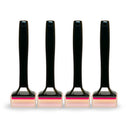
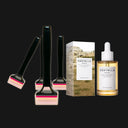
Microneedling is a mechanical stimulus with no hormonal effect, so it can be added alongside drugs that act on DHT. The Dermastamp is a fixed 1 mm, at-home device: the needle stimulates the area around the follicle, and doesn't touch DHT through its mechanism. This is inferred from the mechanism, not measured. You don't skip oral finasteride or dutasteride on the day you stamp. With scalp-applied products, stamping day is a pause, and the exact timing differs by product: the timing of actives. For anyone who doesn't want to touch their hormones, this is a route that stays available, with one limitation: in the study measuring the combination, both groups also received minoxidil, and the study used a 1.5 mm clinical roller, not our fixed 1 mm device; there's less data on it used alone. What it can do, what it can't, and who it's not for: I've written it all on its page.
Sources
Most of the sources are Fynzur's regulatory documents and the spray's studies; none were done with microneedling or with Dermastamp, and the compounded-spray data isn't about Fynzur.
- Polichem S.A. / Hungarian National Center for Public Health and Pharmacy (NNGYK). Fynzur 2.275 mg/ml cutaneous solution spray: patient information leaflet (May 2024). https://ogyei.gov.hu/kiseroirat/bh/bh_0000236904_20240603093534.doc
- Polichem S.A. / NNGYK. Fynzur 2.275 mg/ml cutaneous solution spray: summary of product characteristics (text review date: 22 December 2025). OGYI-T-24394. https://ogyei.gov.hu/kiseroirat/ah/ah_0000236904_20260126164414.doc
- Piraccini BM, Blume-Peytavi U, Scarci F, et al. Efficacy and safety of topical finasteride spray solution for male androgenetic alopecia: a phase III, randomized, controlled clinical trial. J Eur Acad Dermatol Venereol, 2022. PMID 34634163, PMC9297965.
- Caserini M, Radicioni M, Leuratti C, Terragni E, Iorizzo M, Palmieri R. Effects of a novel finasteride 0.25% topical solution on scalp and serum dihydrotestosterone in healthy men with androgenetic alopecia. Int J Clin Pharmacol Ther, 2016. PMID 26636418.
- Caserini M, Radicioni M, Leuratti C, Annoni O, Palmieri R. A novel finasteride 0.25% topical solution for androgenetic alopecia: pharmacokinetics and effects on plasma androgen levels in healthy male volunteers. Int J Clin Pharmacol Ther, 2014. PMID 25074865.
- Zhou C, Yang B, Zeng H, et al. Efficacy and safety of topical finasteride spray solution in the treatment of Chinese men with androgenetic alopecia: a phase III, multicenter, randomized, double-blind, placebo-controlled study. Chin Med J (Engl), 2026. PMID 40090937, PMC13043251.
- Hajheydari Z, Akbari J, Saeedi M, Shokoohi L. Comparing the therapeutic effects of finasteride gel and tablet in treatment of the androgenetic alopecia. Indian J Dermatol Venereol Leprol, 2009. PMID 19172031.
- Gupta AK, Bamimore MA, Williams G, Talukder M. Comparative Efficacy of Minoxidil and 5-Alpha Reductase Inhibitors Monotherapy for Male Pattern Hair Loss: Network Meta-Analysis Study of Current Empirical Evidence. J Cosmet Dermatol, 2025. PMID 40586152, PMC12207719.
- Lee SW, Juhasz M, Mobasher P, Ekelem C, Mesinkovska NA. A Systematic Review of Topical Finasteride in the Treatment of Androgenetic Alopecia in Men and Women. J Drugs Dermatol, 2018. PMID 29601622, PMC6609098.
- Piraccini BM, Rapparini L, Quadrelli F, et al. Effectiveness and Safety of Topical Finasteride for Male Androgenetic Alopecia: Real World Data. Int J Dermatol, 2026. PMID 41874081, PMC13569111.
- Gallo G, Mastorino L, Quaglino P, Ribero S. Long-term effectiveness and safety of topical finasteride 0.25% monotherapy in male androgenetic alopecia: a 52-week real-world retrospective study. Clin Exp Dermatol, 2026. PMID 42546161.
- Złotowska A, Jastrząb-Miśkiewicz B, Krajewski PK. Sexual dysfunction associated with 5α-reductase inhibitors in the treatment of androgenetic alopecia: a systematic review. Front Med (Lausanne), 2026. PMID 42396141, PMC13322902.
- Thomas M, Sinclair R. Painful bilateral gynaecomastia secondary to topical finasteride. Australas J Dermatol, 2025. PMID 39620606.
- European Medicines Agency. Finasteride- and dutasteride-containing medicinal products: Article 31 referral (EMEA/H/A-31/1539). 2025. https://www.ema.europa.eu/en/medicines/human/referrals/finasteride-dutasteride-containing-medicinal-products
- NNGYK / marketing authorisation holders. Finasteride- and dutasteride-containing medicinal products: new risk minimisation measures to reduce the risk of suicidal ideation (DHPC). 3 September 2025. https://ogyei.gov.hu/kiseroirat/dhcp/EMEA-H-A-31-1539%20Finasteride-dutasteride%20DHPC_HU.pdf
- Suchonwanit P, Iamsumang W, Rojhirunsakool S. Efficacy of Topical Combination of 0.25% Finasteride and 3% Minoxidil Versus 3% Minoxidil Solution in Female Pattern Hair Loss: A Randomized, Double-Blind, Controlled Study. Am J Clin Dermatol, 2019. PMID 30206824.
- Starace MVR, Gupta AK, Bamimore MA, et al. The Comparative Effects of Monotherapy with Topical Minoxidil, Oral Finasteride, and Topical Finasteride in Postmenopausal Women with Pattern Hair Loss: A Retrospective Cohort Study. Skin Appendage Disord, 2024. PMID 39108554, PMC11299975.
- Al Sayed NM, El Morsy EH, Hussein TM, Hassan EM. Clinical and Trichoscopic Evaluations of Topical Finasteride 1%, Topical Spironolactone 5%, and Minoxidil 5% in Female Pattern Hair Loss Treatment. Dermatol Pract Concept, 2025. PMID 40117614, PMC11928083.
- Laboratoires Bailleul S.A. Fachinformation: Fynzur für Männer 2,275 mg/ml Spray zur Anwendung auf der Haut (Kopfhaut), Lösung. Stand: September 2024. https://www.fachinfo.de/fi/pdf/024182
- Suchonwanit P, Srisuwanwattana P, Chalermroj N, et al. A randomized, double-blind controlled study of the efficacy and safety of topical solution of 0.25% finasteride admixed with 3% minoxidil vs. 3% minoxidil solution in the treatment of male androgenetic alopecia. J Eur Acad Dermatol Venereol, 2018. PMID 29972712.
- Tanglertsampan C. Efficacy and safety of 3% minoxidil versus combined 3% minoxidil / 0.1% finasteride in male pattern hair loss: a randomized, double-blind, comparative study. J Med Assoc Thai, 2012. PMID 23193746.
- Li Y, Huang Q, Zhou Z, Zhang Y. Comparing minoxidil-finasteride mixed solution with minoxidil solution alone for male androgenetic alopecia: a systematic review and meta-analysis of randomized controlled trials. Front Med (Lausanne), 2025. PMID 41127390, PMC12537375.
- Rossi A, Caro G. Efficacy of the association of topical minoxidil and topical finasteride compared to their use in monotherapy in men with androgenetic alopecia: A prospective, randomized, controlled, assessor blinded, 3-arm, pilot trial. J Cosmet Dermatol, 2024. PMID 37798906.
- U.S. Food and Drug Administration. FDA alerts health care providers, compounders and consumers of potential risks associated with compounded topical finasteride products. 2025. https://www.fda.gov/drugs/human-drug-compounding/fda-alerts-health-care-providers-compounders-and-consumers-potential-risks-associated-compounded
- Yu J, Mochida S, Emery M, et al. Patient Satisfaction, Side Effects, and Other Reactions Reported by Adult Men Prescribed Compounded Topical Finasteride via a National Telehealth Platform: Retrospective Analysis of Real-World Data. JMIR Dermatol, 2026. PMID 41570279, PMC12826577.
- Abeck F, Hansen I, Kött J, et al. Patient-reported outcomes of topical finasteride/minoxidil treatment for male androgenetic alopecia: A retrospective study using telemedical data. J Cosmet Dermatol, 2024. PMID 38713003.
- NNGYK/OGYÉI. Medicines database: FYNZUR 2.275 mg/ml cutaneous solution spray. https://ogyei.gov.hu/gyogyszeradatbazis&action=show_details&item=236904
- Egészségvonal (NNGYK). Rules for prescribing medicines. https://egeszsegvonal.gov.hu/gyogyszerek-a-z/gyogyszerfeliras-szabalyai.html
- NEAK (Hungarian National Health Insurance Fund). Public Medicines Register (PUPHA), public table, 1 September 2026. https://www.neak.gov.hu/felso_menu/szakmai_oldalak/gyogyszer_segedeszkoz_gyogyfurdo_tamogatas/egeszsegugyi_vallalkozasoknak/pupha/Vegleges_PUPHA
- Almirall. Almirall Inaugurates Offices in China to Advance Innovation in Medical Dermatology Through Partnerships (press release). 12 March 2026. https://www.biospace.com/press-releases/almirall-inaugurates-offices-in-china-to-advance-innovation-in-medical-dermatology-through-partnerships
- Bharadwaj AV, Mendiratta V, Rehan HS, Tripathi S. Comparative Efficacy of Topical Finasteride (0.25%) in Combination with Minoxidil (5%) Against 5% Minoxidil or 0.25% Finasteride Alone in Male Androgenetic Alopecia: A Pilot, Randomized Open-Label Study. Int J Trichology, 2023. PMID 37701551, PMC10495069.